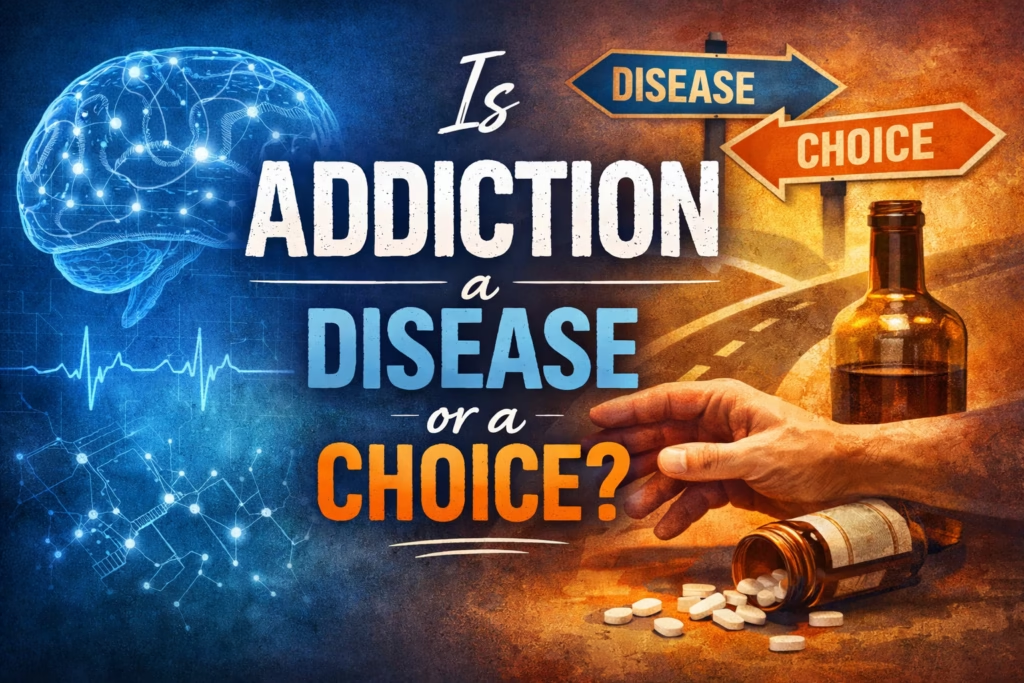
If addiction were simply a choice, quitting would be easy.
But decades of neuroscience tell a very different story about how substances change the brain.
Many people still ask the same question about addiction:
“If someone really wanted to stop, couldn’t they just stop?”
It’s an understandable question. From the outside, addiction can sometimes look like a series of bad decisions. But decades of research in neuroscience and medicine have shown that the reality is far more complex.
Today, most medical and mental health professionals understand addiction as a treatable medical condition that affects brain function, behavior, and decision-making.
Understanding this difference can help reduce stigma and make it easier for individuals and families to seek the support they need.
Why the “Choice” Debate Still Exists
Substance use often begins with a choice.
Someone may decide to:
- Have a drink with friends
- Take a prescription medication for pain
- Experiment with a drug recreationally
Early use is often voluntary.
But over time, repeated substance use can begin to change the way the brain works, especially in areas responsible for reward, motivation, memory, and self-control.
These changes can make it increasingly difficult for a person to control their use — even when they genuinely want to stop.
What Happens in the Brain During Addiction?
Many addictive substances affect the brain’s dopamine system, which is involved in motivation and reward.
Dopamine helps reinforce behaviors that are important for survival, such as eating and social connection. Substances like alcohol, opioids, nicotine, and stimulants can produce much larger dopamine surges than natural rewards.
Over time, the brain adapts.
Some of the changes that may occur include:
- Reduced sensitivity to natural rewards
- Increased cravings for the substance
- Difficulty experiencing pleasure without it
- Impaired decision-making and impulse control
As these changes develop, substance use becomes less about pleasure and more about avoiding discomfort, cravings, or withdrawal symptoms.
Research shows that these brain changes are a key reason addiction can be so difficult to overcome without support.
Why Willpower Alone Is Often Not Enough
Many people struggling with addiction do try to quit on their own.
In fact, repeated attempts to stop are very common.
However, addiction can affect brain circuits involved in:
- self-control
- stress regulation
- reward processing
- emotional regulation
This is one reason relapse can occur even after someone has strong intentions to stop.
It’s not simply a matter of character or motivation.
Just as other chronic health conditions often require treatment and support, addiction frequently benefits from structured care, counseling, and sometimes medical treatment.
You can learn more about the types of support available through outpatient addiction treatment programs here:
https://alpinecenters.com/outpatient-treatment/
So Is Addiction a Disease?
Most major medical organizations recognize addiction as a chronic but treatable health condition.
These organizations include:
- The American Medical Association
- The American Psychiatric Association
- The National Institute on Drug Abuse
- The World Health Organization
Describing addiction as a disease does not remove personal responsibility, but it does recognize that biological, psychological, and social factors all contribute to the condition. We see this same pattern of disease in most chronic illnesses, including type 2 diabetes, hypertension (high blood pressure), hyperlipidemia (high cholesterol) and more.
Understanding addiction this way helps shift the focus from blame to treatment and recovery.
Why This Perspective Matters
Viewing addiction as a health condition can help people:
- Seek treatment earlier
- Reduce shame and stigma
- Support loved ones more effectively
- Focus on recovery instead of blame
For many individuals, shame and fear of judgment are major barriers to asking for help.
Recognizing that addiction has biological and psychological components can make those conversations easier.
A Quick Self-Reflection About Substance Use
If you’ve been wondering whether substance use might be becoming a concern, it can help to ask yourself a few simple questions:
- Have I tried to cut down but found it difficult?
- Do I sometimes use more than I intended?
- Do I feel strong urges or cravings to use?
- Has my substance use affected relationships, work, or mental health?
- Do I continue using even though it has caused problems?
If several of these questions resonate with you, speaking with a healthcare professional can provide helpful perspective.
Clinicians often use structured screening tools to help evaluate substance use patterns, including:
ASSIST (Alcohol, Smoking and Substance Involvement Screening Test)
https://www.who.int/publications/i/item/978924159938-2
TAPS (Tobacco, Alcohol, Prescription medication, and other Substance Use Tool)
https://nida.nih.gov/taps
These tools can help identify whether substance use may be low-risk, moderate-risk, or something that may benefit from further evaluation.
These screenings are educational tools and are not a formal diagnosis.
Recovery Is Possible
One of the most important things to understand about addiction is that recovery happens every day.
With the right support, people can rebuild their health, relationships, and sense of purpose.
Treatment may include:
- counseling or therapy
- outpatient treatment programs
- medication-assisted treatment for some substances
- peer support or recovery groups
Different people need different types of support, but recovery is possible for many individuals.
If you’d like to learn more about how addiction treatment works or how to schedule a consultation, you can contact us here:
https://nmm.qtb.mybluehost.me/contact/
Common Questions About Addiction
If addiction is a disease, does that mean people aren’t responsible for their actions?
No. Addiction being a medical condition does not remove personal responsibility. It simply recognizes that biological and psychological changes in the brain can make substance use much harder to control without support and treatment.
Why do some people become addicted while others do not?
Addiction risk is influenced by several factors, including genetics, mental health, trauma history, environment, and early exposure to substances.
Can people recover from addiction?
Yes. Millions of people recover from substance use disorders and go on to live healthy and meaningful lives. Treatment, support networks, and lifestyle changes can all play important roles in recovery.
Do people need inpatient rehab to recover?
Not always. Many individuals benefit from outpatient treatment programs, which allow them to receive structured care while continuing to live at home and maintain work or family responsibilities.
A Gentle Next Step
If you or someone you care about is struggling with substance use, you are not alone.
A simple conversation with a healthcare professional can often provide clarity about what is happening and what options may be helpful.
Recovery doesn’t require perfection.
It often begins with curiosity, honesty, and the willingness to talk.
References
Volkow ND, Koob GF, McLellan AT. Neurobiologic Advances from the Brain Disease Model of Addiction. New England Journal of Medicine. 2016;374(4):363–371.
Koob GF, Volkow ND. Neurobiology of Addiction: A Neurocircuitry Analysis. The Lancet Psychiatry. 2016;3(8):760–773.
McLellan AT, Lewis DC, O’Brien CP, Kleber HD. Drug Dependence, a Chronic Medical Illness: Implications for Treatment, Insurance, and Outcomes Evaluation. Journal of the American Medical Association. 2000;284(13):1689–1695.
National Institute on Drug Abuse. Drugs, Brains, and Behavior: The Science of Addiction.Substance Abuse and Mental Health Services Administration. Substance Use and Mental Health Indicators in the United States.