Depression and Substance Use: Which Comes First?
Do depression and substance use go hand in hand? Learn how they’re connected, which comes first, and when it may be time to seek help.
It’s a question many people quietly wonder:
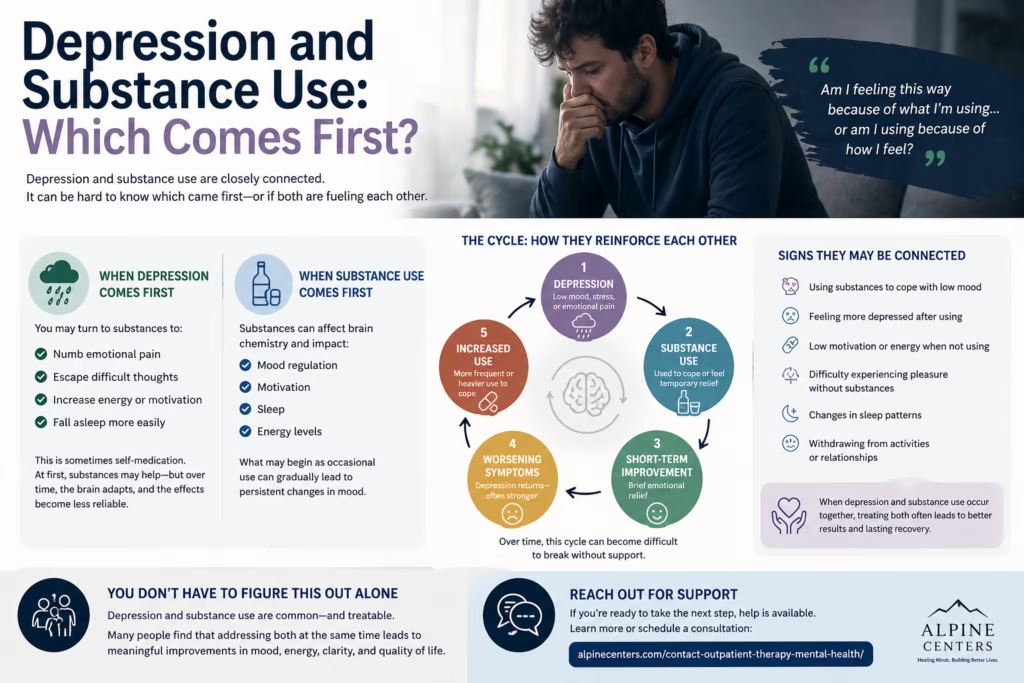
“Am I feeling this way because of what I’m using… or am I using because of how I feel?”
Depression and substance use are closely connected, and for many people, it’s not always clear which came first. Understanding that relationship can help bring clarity—and make it easier to take the next step toward feeling better.
Do Depression and Substance Use Often Occur Together?
Yes. Depression and substance use frequently occur at the same time. This is often referred to as co-occurring disorders.
Many individuals who struggle with substance use also experience:
- persistent low mood
- loss of motivation
- feelings of hopelessness
- fatigue or low energy
At the same time, people dealing with depression may turn to substances in an attempt to feel better—even temporarily.
Because of this overlap, the two conditions often become closely intertwined.
When Depression Comes First
For some individuals, depression develops before substance use. They may begin using substances to:
- numb emotional pain
- escape difficult thoughts
- increase energy or motivation
- fall asleep more easily
This is sometimes referred to as self-medication. At first, substances may seem to help. But over time, the brain adapts, and the effects become less reliable—often requiring more frequent or heavier use.
When Substance Use Comes First
In other cases, substance use begins first and contributes to the development of depression over time. Substances can affect brain chemistry in ways that impact:
- mood regulation
- motivation
- sleep
- energy levels
For example:
- alcohol can disrupt sleep and lower mood over time
- stimulants can lead to emotional crashes
- withdrawal from many substances can increase depressive symptoms
What may begin as occasional use can gradually lead to persistent changes in mood.
The Cycle: How They Reinforce Each Other
For many people, it’s not one or the other—it’s both.
Depression and substance use can create a cycle:
1. Depression
Low mood, stress, or emotional pain
2. Substance Use
Used to cope or feel temporary relief
3. Short-Term Improvement
Brief emotional relief
4. Worsening Symptoms
Depression returns—often stronger
5. Increased Use
More frequent or heavier use to cope
Over time, this cycle can become difficult to break without support.
Signs They May Be Connected
Some signs that depression and substance use may be influencing each other include:
- using substances to cope with low mood
- feeling more depressed after using
- low motivation or energy when not using
- difficulty experiencing pleasure without substances
- changes in sleep patterns
- withdrawing from activities or relationships
These patterns can develop gradually and may not be obvious at first.
Why Treating Both Matters
When depression and substance use occur together, treating only one often isn’t enough.
For example:
- treating depression alone may not address substance use patterns
- stopping substance use alone may not resolve underlying depression
Effective treatment often focuses on both at the same time.
This approach can help improve emotional stability, energy levels, coping skills, and long-term recovery outcomes.
A Quick Self-Reflection
If you’re unsure whether depression and substance use may be connected, consider:
- Do I use substances to cope with low mood or stress?
- Do I feel worse emotionally after using?
- Has my motivation or energy changed over time?
- Do I rely on substances to get through the day or sleep?
If these questions resonate, it may be helpful to talk with a healthcare professional.
You Don’t Have to Figure This Out Alone
If you’re dealing with both depression and substance use, it can feel confusing—and sometimes overwhelming.
But this combination is common, and it is treatable.
Many people find that addressing both at the same time leads to meaningful improvements in:
- mood
- energy
- clarity
- overall quality of life
If you’d like to learn more about how to get started or schedule a consultation, you can find more information here: https://alpinecenters.com/contact-outpatient-therapy-mental-health/
Common Questions About Depression and Substance Use
Which comes first: depression or substance use?
It can be either. For some people, depression leads to substance use. For others, substance use contributes to depression. In many cases, both influence each other.
Can substance use make depression worse?
Yes. Many substances can worsen mood over time, especially with repeated use or withdrawal.
Can both be treated at the same time?
Yes. Many treatment programs are designed to address both conditions together for better outcomes.
Do I need help if my symptoms feel mild?
If substance use is becoming a regular way of coping, it may still be helpful to talk with a professional—even if symptoms feel manageable.
References
Substance Abuse and Mental Health Services Administration. Co-Occurring Disorders.
National Institute on Drug Abuse. Common Comorbidities with Substance Use Disorders.
Koob GF, Volkow ND. Neurobiology of Addiction: A Neurocircuitry Analysis. The Lancet Psychiatry. 2016;3(8):760–773.
American Psychiatric Association. Diagnostic and Statistical Manual of Mental Disorders (DSM-5-TR). 2022.
Hasin DS, et al. Epidemiology of Adult DSM-5 Major Depressive Disorder and Its Specifiers. JAMA Psychiatry. 2018.