
How to Support a Loved One Struggling with Addiction (Without Enabling)
Watching someone you care about struggle with addiction can be heartbreaking.
You may feel worried, frustrated, confused, or even helpless.
Many family members find themselves asking difficult questions:
“Am I helping—or am I making things worse?”
“How do I support them without enabling the behavior?”
“What can I actually do?”
These are incredibly common questions, and there are rarely easy answers.
When someone you love is struggling with substance use, it’s natural to want to protect them from consequences, ease their pain, or help them regain stability. But sometimes, in trying to help, family members unintentionally create patterns that allow the addiction to continue.
Learning how to support someone in a healthy way can make a meaningful difference—for both your loved one and yourself.
Understanding the Difference Between Support and Enabling
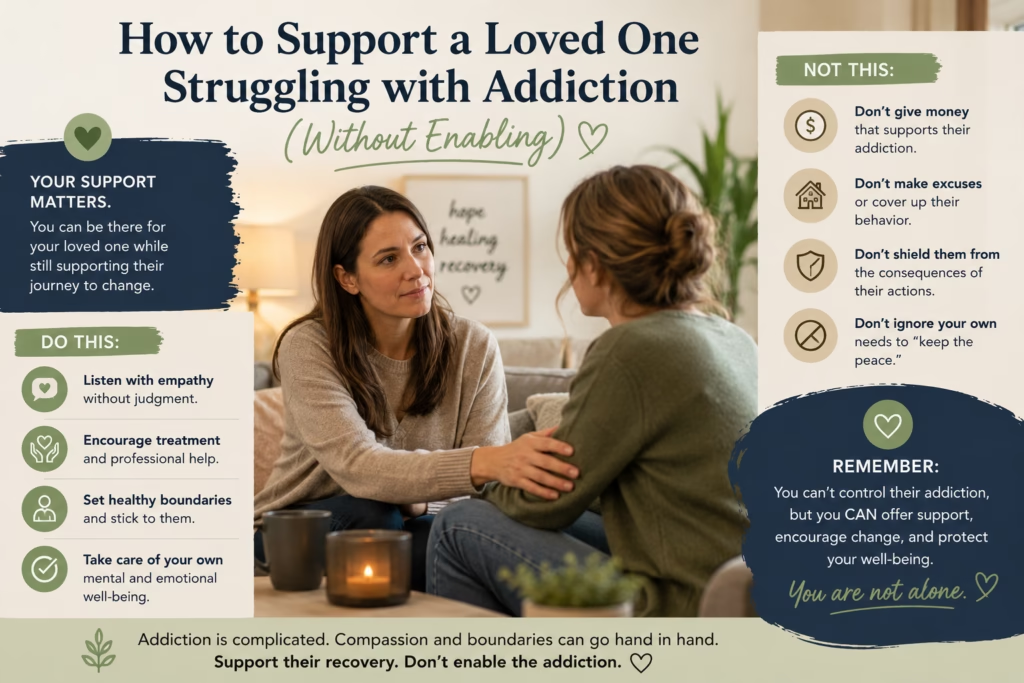
One of the hardest parts of loving someone with addiction is knowing where support ends and enabling begins. Support helps a person move toward recovery while enabling protects the addiction from consequences.
The difference often comes down to whether your actions are helping your loved one face reality—or helping them avoid it.
Support might look like encouraging treatment, listening without judgment, or helping them access professional care.
Enabling often looks like removing natural consequences in ways that allow substance use to continue unchecked.
This distinction can be difficult because enabling usually comes from a place of love.
A parent may cover financial problems because they don’t want their child to suffer. A spouse may repeatedly call in sick for their partner to protect their job. A sibling may provide money hoping it will help stabilize things.
These actions are understandable, but over time, they can unintentionally reduce the urgency for change.
Why Addiction Affects the Whole Family
Addiction rarely impacts only the person using substances. It often affects relationships, communication patterns, trust, emotional health, and family dynamics. Loved ones may find themselves:
constantly worrying about what might happen next,
walking on eggshells to avoid conflict,
making excuses for behaviors,
or feeling responsible for fixing the situation.
Over time, this emotional strain can become exhausting. Many family members begin organizing their lives around trying to manage someone else’s addiction. This is why support for families is just as important as support for the individual seeking treatment.
What Healthy Support Actually Looks Like
Supporting someone well does not mean rescuing them. It means creating conditions that encourage honesty, accountability, and treatment. Healthy support often begins with open, calm communication. Instead of accusations or ultimatums, it can help to focus on observations and concern.
For example:
“I’ve noticed you seem overwhelmed lately, and I’m worried about how much you’ve been drinking.”
This type of conversation creates space for dialogue rather than defensiveness. It also helps to encourage professional support rather than trying to become their counselor yourself. Addiction is a complex medical and psychological condition. While love and encouragement matter, recovery often requires professional guidance. You can support your loved one by helping them research treatment options, offering to attend an appointment with them, or simply reminding them that help is available.
The Importance of Boundaries
One of the most loving things you can do is establish clear, healthy boundaries. Boundaries are not punishments.They are limits that protect your wellbeing while creating accountability.
This might mean deciding:
you will not provide money,
you will not lie to cover for them,
you will not tolerate substance use in your home,
or you will step away from conversations that become abusive or manipulative.
Setting boundaries can feel uncomfortable, especially if you fear conflict or guilt. But boundaries communicate something important:
“I care about you, and I will not participate in behaviors that harm either of us.”
Healthy boundaries often create clarity—for everyone involved.
Avoiding the Trap of Constant Monitoring
When someone you love is struggling, it can be tempting to monitor everything.
Checking their location.
Watching for signs of use.
Searching for evidence.
Trying to control every variable.
This usually comes from fear. But constant monitoring often creates increased tension and emotional exhaustion without creating meaningful change. You cannot control another person’s recovery. You can only control how you respond. Shifting energy away from surveillance and toward healthy support often helps families regain emotional balance.
Taking Care of Yourself Matters Too
Many loved ones become so focused on helping the person struggling that they neglect their own needs. This is understandable—but unsustainable. Supporting someone with addiction can be emotionally draining. Your own mental health matters.
Taking care of yourself may include:
seeking counseling,
joining a family support group,
setting aside time for rest,
maintaining your own routines and relationships.
Caring for yourself is not selfish. It strengthens your ability to respond thoughtfully rather than react from exhaustion or fear.
When It’s Time to Encourage Professional Help
There are times when professional intervention becomes especially important. This may include situations where your loved one is:
unable to stop despite repeated attempts,
experiencing worsening mental health,
showing signs of withdrawal,
experiencing consequences at work or home,
or becoming increasingly isolated.
You do not need to wait for a dramatic crisis to encourage treatment. Early intervention can often make recovery more manageable. Sometimes simply saying, “You don’t have to do this alone. Help is available.” can open an important door.
A Quick Reflection for Family Members
If someone you love is struggling, ask yourself:
Am I protecting them from consequences?
Am I sacrificing my own wellbeing trying to manage this?
Have I been carrying responsibility that isn’t mine?
Would professional support help both of us?
These questions can help create clarity.
Recovery Often Begins with Honest Support
Addiction recovery is rarely a straight line. There may be setbacks, difficult conversations, and moments of uncertainty. But change is possible. The most effective support often isn’t rescuing, fixing, or controlling. It’s offering compassion while maintaining healthy boundaries and encouraging professional care.
If you’d like to learn more about how to help a loved one take the first step, you can find more information here:
https://alpinecenters.com/alpine-centers-outpatient-addiction-treatment-near-me/
Common Questions About Supporting a Loved One with Addiction
How do I know if I’m enabling?
If your actions consistently protect your loved one from experiencing the consequences of substance use, enabling may be occurring.
Should I give ultimatums?
Clear boundaries can be helpful, but threats without follow-through often create more confusion.
What if they refuse help?
You cannot force change, but you can maintain healthy boundaries and continue encouraging treatment.
Should family members seek support too?
Yes. Family counseling and support groups can be extremely valuable.
Contact Alpine Centers today: 801-268-1714
References
Substance Abuse and Mental Health Services Administration (SAMHSA).
Substance Use Disorder Treatment and Family Support Resources
https://www.samhsa.gov
National Institute on Drug Abuse (NIDA).
Family Support and Addiction Treatment
https://nida.nih.gov
McCrady BS, Epstein EE.
Addictions: A Comprehensive Guidebook. Oxford University Press.
Meyers RJ, Wolfe BL.
Get Your Loved One Sober: Alternatives to Nagging, Pleading, and Threatening.
American Society of Addiction Medicine (ASAM).
The ASAM Criteria
https://www.asam.org/asam-criteria