The Link Between Anxiety and Addiction: Why They Often Go Together
Anxiety and addiction often go hand in hand. Learn why they’re connected, how substance use can worsen anxiety, and when to seek help.
Many people who struggle with substance use have asked themselves some version of this question:
“Am I using this to cope… or is it making things worse?”
Anxiety and addiction are closely connected, and for many individuals, one can quietly fuel the other.
Understanding that connection can be an important step toward recognizing what’s happening—and knowing when it may be time to seek support.
How Anxiety and Substance Use Become Connected
It often starts in a way that makes sense.
Someone feels overwhelmed, anxious, stressed, or unable to relax or sleep
And they find something that seems to help a drink to unwind, a medication to calm down, something to take the edge off. At first, it may feel like relief.
Substances can temporarily reduce anxiety by affecting brain chemistry—especially systems related to stress and relaxation. But over time, the relationship can change.
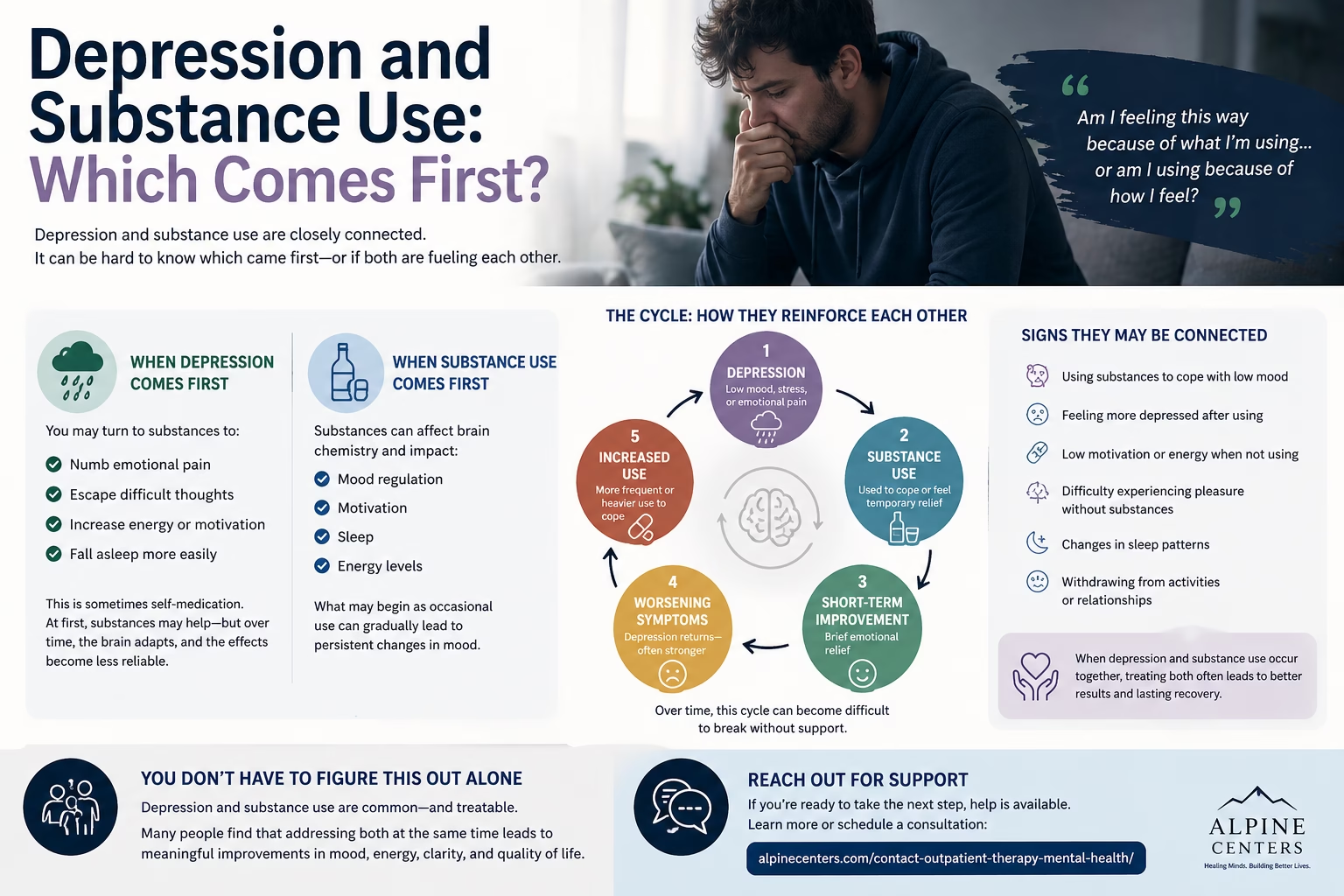
The Cycle: Relief → Dependence → Increased Anxiety
What begins as relief can gradually become a cycle.
1. Temporary Relief
Substances reduce feelings of anxiety in the short term.
2. Increased Reliance
The brain begins to associate relief with the substance.
3. Tolerance Develops
More of the substance is needed to achieve the same calming effect.
4. Anxiety Returns (Often Worse)
When the substance wears off, anxiety can come back stronger.
5. Repeat
The cycle continues, often becoming more difficult to break over time.
This pattern is sometimes referred to as self-medication, and it’s very common.
How Substance Use Can Worsen Anxiety
While substances may provide short-term relief, many can actually increase anxiety over time, including:
- alcohol (can disrupt sleep and increase next-day anxiety)
- stimulants (can increase heart rate and nervous system activity)
- cannabis (can increase anxiety or panic in some individuals)
- withdrawal from many substances (can heighten anxiety symptoms)
Over time, this can create a situation where:
The thing someone is using to manage anxiety is also making it harder to feel calm without it.
Signs Anxiety and Substance Use May Be Connected
Some signs that anxiety and substance use may be influencing each other include:
- using substances specifically to cope with stress or anxiety
- feeling more anxious when not using
- difficulty relaxing without substances
- increased anxiety after using
- trouble sleeping without substances
- feeling dependent on substances to “feel normal”
These patterns can develop gradually and may not be immediately obvious.
Why This Combination Can Be Challenging
When anxiety and substance use occur together, they can reinforce each other.
- Anxiety increases the urge to use
- Substance use increases anxiety over time
This can make it harder to address either issue on its own.
For this reason, many treatment approaches focus on both mental health and substance use at the same time, rather than treating them separately.
What Treatment Often Looks Like
Treatment for anxiety and addiction doesn’t have to mean stepping away from your entire life.
Many people benefit from outpatient treatment programs, which allow them to receive care while continuing to:
- work
- attend school
- care for family
Treatment may include:
- therapy focused on anxiety and coping skills
- education about the connection between mental health and substance use
- relapse prevention strategies
- medication support (when appropriate)
If you’d like to learn more about how outpatient treatment can help, you can read more here:
https://alpinecenters.com/addiction-treatment-outpatient-salt-lake-city/
Healthier Ways to Manage Anxiety
As part of recovery, many people learn new ways to manage anxiety without relying on substances.
These may include:
- structured therapy (such as cognitive behavioral therapy)
- exercise and movement
- improved sleep routines
- mindfulness or relaxation techniques
- building supportive relationships
These strategies can help regulate the nervous system in more sustainable ways over time.
You’re Not Alone in This
Many people experience both anxiety and substance use challenges at the same time.
It’s not a personal failure—it’s a common and treatable pattern.
Addressing both at the same time can lead to:
- improved mental clarity
- reduced anxiety
- better sleep
- stronger emotional stability
If you’d like to learn more about how to get started or schedule a consultation, you can find more information here:
https://alpinecenters.com/contact-alpine-centers-salt-lake-city/
Common Questions About Anxiety and Addiction
Does anxiety cause addiction?
Not directly, but anxiety can increase the likelihood of using substances to cope, which can lead to dependence over time.
Can addiction cause anxiety?
Yes. Many substances can increase anxiety, especially with long-term use or during withdrawal.
Can both be treated at the same time?
Yes. Many treatment programs are designed to address both anxiety and substance use together.
Do I need treatment if my anxiety feels manageable?
If substance use is becoming a regular way of coping, it may still be helpful to talk with a professional—even if symptoms feel mild.
References
Smith JP, Randall CL. Anxiety and Alcohol Use Disorders: Comorbidity and Treatment Considerations. Alcohol Research. 2012;34(4):414–431.
Koob GF, Volkow ND. Neurobiology of Addiction: A Neurocircuitry Analysis. The Lancet Psychiatry. 2016;3(8):760–773.
National Institute on Drug Abuse. Common Comorbidities with Substance Use Disorders.