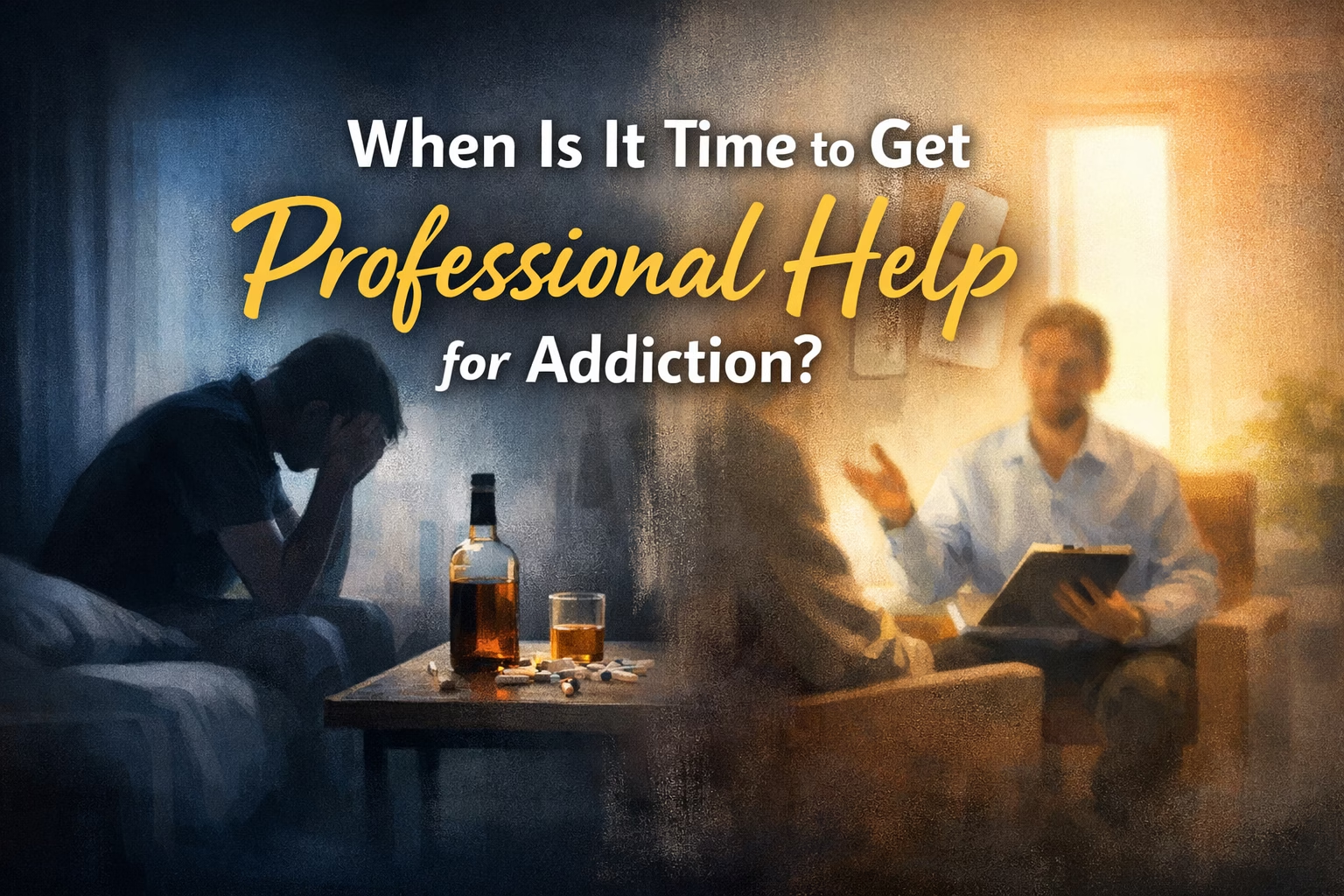
When Is It Time to Get Professional Help for Addiction?
Not sure if you need help for substance use? Learn the key red flags, what outpatient treatment looks like, and what to expect at your first appointment.
There’s a moment many people experience, even if they don’t talk about it.
It’s not a crisis. It’s not rock bottom.
It’s a quieter thought:
“Is this becoming something I can’t manage on my own?”
Knowing when to seek professional help for substance use isn’t always obvious. Many people wait longer than they need to—not because they don’t care, but because they’re unsure what actually qualifies as a problem.
The truth is, you don’t need to be certain to ask for help. You only need to notice that something may be changing. Reaching out and asking for advice from a professional does not mean admitting defeat, it means being proactive.
Red Flags That It May Be Time to Seek Help
Substance use doesn’t have to be extreme to be concerning. Often, it’s a pattern of smaller changes that signal it may be time to talk with a professional.
Some common red flags include:
You’ve Tried to Cut Back, But Can’t
You’ve told yourself you’ll drink less or stop using—but it doesn’t stick.
You Use to Cope With Stress or Emotions
Substances become your go-to way to handle anxiety, stress, boredom, or sleep.
Your Tolerance Has Increased- You need more than you used to in order to feel the same effect.
You Feel Off Without It- You may feel irritable, anxious, or restless when you’re not using.
It’s Affecting Your Mental Health- You notice increased anxiety, mood swings, or low motivation.
You’re Thinking About It More Often- Planning when you’ll use, looking forward to it, or feeling preoccupied with it.
You’re Hiding or Minimizing Your Use- Downplaying how much or how often you’re using.
People Close to You Have Expressed Concern- Even if you’re not sure you agree, it’s worth paying attention.
You don’t need all of these to be true. Even one or two consistent patterns can be a sign that additional support could help.
Why People Often Wait Too Long
Many people delay seeking help because:
- “It’s not that bad yet”
- “I should be able to handle this myself”
- “I’m still functioning”
- “Other people have it worse”
These thoughts are common—but they can also keep people stuck. Addiction often progresses gradually. Waiting for things to get worse can make recovery more difficult than it needs to be. Seeking help earlier often leads to:
- better outcomes
- fewer health complications
- less disruption to work and relationships
What Outpatient Treatment Actually Looks Like
One of the biggest misconceptions is that getting help means putting your life on hold. For many people, that’s not the case. Outpatient treatment is designed to allow individuals to receive structured support while continuing to live at home and maintain daily responsibilities.
Outpatient care may include:
- individual counseling or therapy
- group therapy sessions
- education about substance use and coping strategies
- relapse prevention planning
- medication-assisted treatment (when appropriate)
Programs can vary in intensity, but many are flexible enough to work around:
- jobs
- school schedules
- family responsibilities
If you’d like to learn more about our outpatient addiction treatment programs, you can read more here: https://alpinecenters.com/addiction-treatment-outpatient-salt-lake-city/
What the First Appointment Feels Like
For many people, the hardest part is simply walking through the door. There’s often uncertainty about what will happen or how they’ll be perceived. In reality, the first appointment is usually much more straightforward and supportive than people expect.
A typical first visit may include:
A Conversation, Not an Interrogation
You’ll be asked about your substance use, health history, and what you’ve been experiencing—but at your own pace.
A Chance to Ask Questions
You can ask about treatment options, confidentiality, and what next steps might look like.
No Immediate Pressure
You’re not required to commit to anything on the spot. The goal is understanding, not forcing decisions.
A Plan (If You Want One)
If appropriate, a provider may recommend next steps based on your situation.
Most people leave their first appointment feeling:
- relieved
- more informed
- less alone
If you’d like to learn more about how to schedule an evaluation or consultation, you can find more information here: https://alpinecenters.com/contact-alpine-centers-salt-lake-city/
You Don’t Have to Be Sure
One of the biggest barriers to getting help is the belief that you need to be certain something is wrong. You don’t. You can seek help if:
- you’re unsure
- you’re curious
- something just feels off
A professional can help you sort out what’s actually happening and what your options are.
A Quick Self-Check to know When Is It Time to Get Professional Help for Addiction?
If you’re still unsure, ask yourself:
- Am I thinking about cutting back?
- Have I tried and struggled to do so?
- Is substance use becoming part of my routine?
- Do I feel different when I don’t use?
If these questions resonate, it may be worth having a conversation.
Taking the First Step
Reaching out for help doesn’t mean something is “seriously wrong.” It means you’re paying attention. It means you’re being honest. And often, it means you’re catching something before it becomes much harder to manage. Recovery doesn’t begin with certainty.
It begins with a question—and the willingness to ask it out loud.
Common Questions About Getting Help for Addiction
Do I need to hit rock bottom before getting help?
No. In fact, seeking help earlier often leads to better outcomes and less disruption to your life.
Can I keep working while in treatment?
Yes. Outpatient programs are specifically designed to allow individuals to continue working and managing responsibilities.
What if I’m not sure I have a problem?
That’s okay. A professional can help assess your situation and provide guidance without pressure.
Is the first appointment confidential?
Yes. Addiction treatment is protected by strict confidentiality laws.
References
American Psychiatric Association. Diagnostic and Statistical Manual of Mental Disorders (DSM-5-TR). 2022.
Volkow ND, Koob GF, McLellan AT. Neurobiologic Advances from the Brain Disease Model of Addiction. New England Journal of Medicine. 2016;374(4):363–371.
Substance Abuse and Mental Health Services Administration. Treatment Improvement Protocols.
National Institute on Drug Abuse. Principles of Drug Addiction Treatment.