Kratom Addiction Treatment in Salt Lake City: Withdrawal, Long-Term Effects, and When to Get Help
Learn the long-term effects of kratom, common withdrawal symptoms, and when to seek kratom addiction treatment in Utah. Alpine Centers in Salt Lake City offers support for substance use recovery.
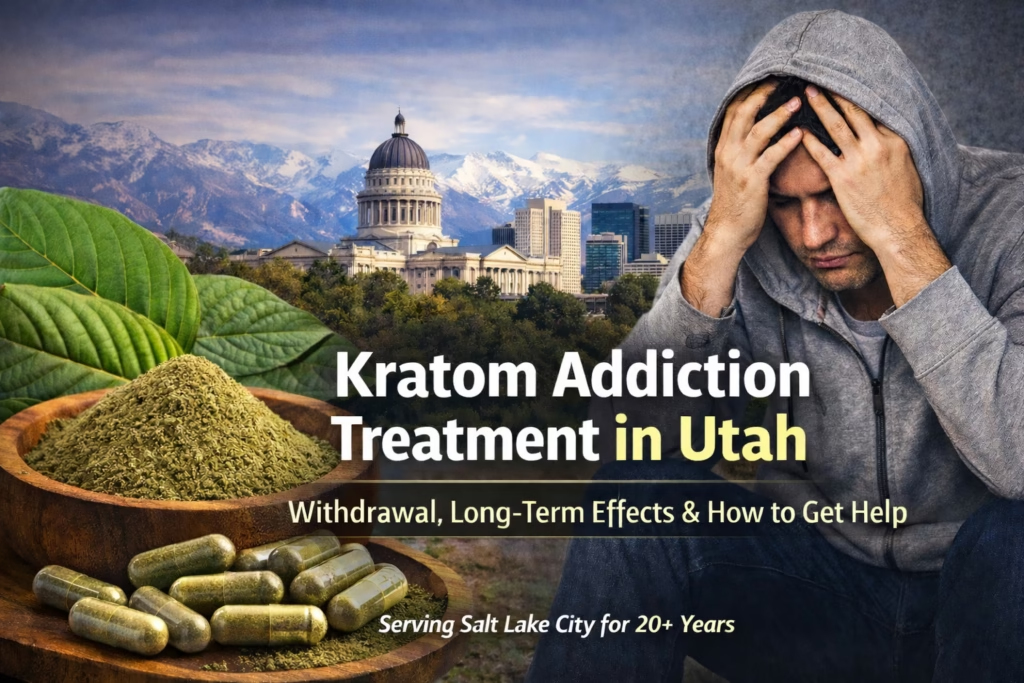
Kratom Addiction Treatment in Salt Lake City: Withdrawal Symptoms, Long-Term Effects, and Recovery
Kratom is often marketed as a “natural” product, but natural does not mean harmless. Kratom comes from the Mitragyna speciosa plant and can produce stimulant-like effects at lower doses and opioid-like effects at higher doses. In real life, that means some people use kratom for energy, mood, pain, or even to try to self-manage opioid withdrawal, but the substance can also lead to dependence, cravings, and its own withdrawal syndrome.
In Utah, kratom has become a bigger public issue because the state recently tightened its laws. Utah’s 2026 legislation does not fully outlaw kratom across the board, but it sharply restricts what can legally be sold, who can buy it, and where it can be sold. Beginning May 6, 2026, Utah law limits kratom sales to registered sellers that are licensed as retail tobacco specialty businesses, raises the minimum purchase age to 21, and bans certain kratom products, including products that fall outside the state’s “pure leaf kratom” definition.
What is kratom?
Kratom is an herbal substance derived from leaves of a tree native to Southeast Asia. Its best-known active compounds include mitragynine and 7-hydroxymitragynine. Public health agencies note that kratom can affect the brain in ways that resemble both stimulants and opioids, depending on the amount used and the product’s potency.
One reason kratom can be risky is that products are not standardized. Potency can vary widely, and some products may contain concentrated alkaloids or contaminants. FDA has also warned about contamination concerns, including Salmonella and heavy metals, in some kratom products.
Is kratom addictive?
Yes, kratom can be addictive. FDA says cases of kratom-related substance use disorder have been observed, including people using more than intended, using longer than intended, developing cravings, building tolerance, and experiencing withdrawal when they stop. Mayo Clinic and other clinical sources also warn that people can become dependent on kratom even when they first started using it for pain, mood, or to try to come off opioids.
Long-term effects of kratom
Research on long-term kratom use is still developing, so no honest clinician should claim every long-term effect is fully mapped out. But the known risks are serious enough to take heavily. Public health and clinical sources warn that ongoing kratom use may be associated with dependence, tolerance, substance use disorder, withdrawal, and serious adverse effects such as liver toxicity and seizures. Newer CDC reporting also notes increasing hospitalizations tied to kratom-related adverse effects, especially with stronger products.
Possible long-term or ongoing problems may include:
- needing more kratom over time to get the same effect
- difficulty stopping despite negative consequences
- mood changes, irritability, or anxiety when not using
- physical dependence and withdrawal symptoms
- possible liver problems or other medical complications
- worsening risk when kratom is combined with alcohol, opioids, benzodiazepines, or other substances
Kratom withdrawal symptoms
Many people are shocked to learn that kratom withdrawal is real. While severity can vary, kratom withdrawal can resemble a milder opioid-like withdrawal picture in some individuals, especially with frequent or high-potency use. Clinical and public health sources describe withdrawal symptoms such as cravings, irritability, restlessness, anxiety, insomnia, muscle aches, and gastrointestinal distress.
Common kratom withdrawal symptoms may include:
- anxiety
- irritability
- restlessness
- depressed mood
- insomnia or poor sleep
- muscle aches
- sweating
- nausea
- vomiting
- diarrhea
- cravings for kratom
If someone is using very potent kratom products, using other substances too, or has underlying medical or mental health issues, withdrawal can be more complicated and should not be brushed off as “just uncomfortable.” CDC’s recent reporting shows kratom-related harms are becoming more medically and psychiatrically complex.
When to seek treatment for kratom use
It is time to seek help when kratom starts controlling your behavior instead of serving the purpose you originally used it for. Warning signs include taking more than planned, hiding use, feeling unable to stop, using kratom to feel normal, or continuing to use despite problems at home, work, or in your health. FDA’s definition of observed kratom-related substance use disorder closely tracks these patterns.
You should seek professional help sooner rather than later if you:
- cannot get through the day without kratom
- keep increasing your dose
- have tried to quit and relapsed
- use kratom alongside alcohol, opioids, or benzodiazepines
- have anxiety, depression, trauma, or other mental health symptoms along with use
- experience severe nausea, shaking, confusion, seizures, or signs of liver problems such as jaundice
What kratom addiction treatment may involve
Effective treatment usually starts with a real assessment, not guesswork. That means looking at how much kratom someone is taking, what type of product they are using, whether other substances are involved, what withdrawal symptoms they are having, and whether there are co-occurring mental health concerns. Evidence-based addiction care generally centers on medical evaluation, behavioral treatment, relapse prevention, and the right level of care based on severity. SAMHSA emphasizes treatment access through licensed behavioral health providers and treatment locators for substance use disorders.
Depending on the person, treatment for kratom misuse may include:
- clinical assessment and treatment planning
- supervised support during withdrawal
- individual therapy
- group therapy
- relapse prevention planning
- treatment for co-occurring anxiety, depression, or trauma
- step-down support through outpatient or intensive outpatient care when appropriate
Kratom treatment in Salt Lake City, Utah
If you or someone you love is struggling with kratom use, getting help early can make recovery much easier. Kratom dependence often starts quietly. Many people do not realize how much the substance is affecting sleep, mood, motivation, finances, work, and relationships until they try to stop and discover they cannot do it alone.
At Alpine Centers, people in Salt Lake City and across Utah can get support for substance use concerns in a structured, compassionate setting. If kratom use is becoming hard to control, reaching out for an evaluation is a smart move, not an overreaction.
You do not have to wait until it gets worse
A lot of people delay treatment because kratom is sold in stores, talked about online like a wellness product, or viewed as safer than opioids. That delay can cost months or years. If you are noticing withdrawal, cravings, daily dependence, or increasing use, now is a good time to talk with a treatment professional.
Concerned about kratom use?
Kratom can lead to dependence, withdrawal, and serious health risks. Alpine Centers helps individuals in Salt Lake City and across Utah get professional support for substance use and co-occurring mental health concerns.
Is kratom legal in Utah?
Utah does not have a complete kratom ban in effect, but the state passed major restrictions in 2026. The law limits who can sell kratom, raises the purchase age to 21, and bans certain kratom products.
Can kratom cause withdrawal?
Yes. People who use kratom regularly can develop dependence and experience withdrawal symptoms when they stop. Reported symptoms include cravings, irritability, anxiety, insomnia, muscle aches, nausea, and diarrhea.
What are the long-term effects of kratom?
Long-term risks can include tolerance, dependence, substance use disorder, withdrawal, and serious adverse effects such as liver toxicity and seizures. Higher-potency products may increase risk.
Should I get professional help for kratom use?
You should consider professional treatment if you cannot stop on your own, keep increasing your use, have withdrawal symptoms, or use kratom along with other substances.