
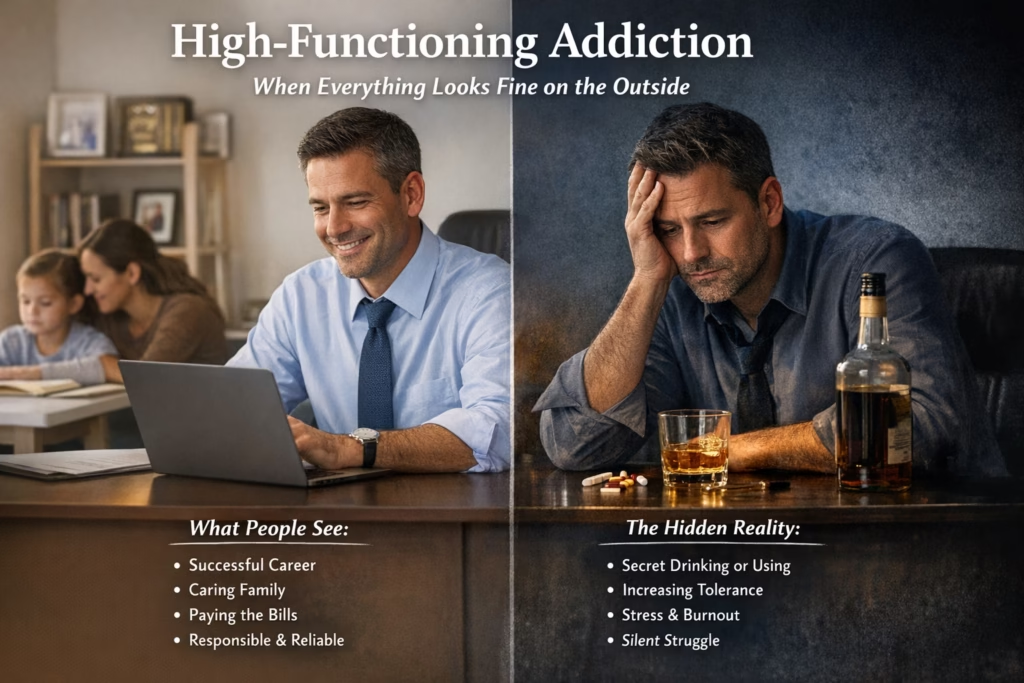
High-functioning addiction can be difficult to recognize because life may still appear stable on the outside. Learn the hidden signs and why early treatment matters.
When Addiction Doesn’t Look Like Addiction
From the outside, everything may look completely normal.
Someone may be:
- successful at work
- raising a family
- paying their bills
- maintaining relationships
- appearing responsible and dependable
Because of this, many people assume addiction only affects individuals whose lives have already fallen apart.
But addiction does not always look that way.
In many cases, people struggling with substance use are still managing their daily responsibilities. This pattern is often referred to as high-functioning addiction, sometimes described as being a “functioning alcoholic” or “functioning addict.”
It means a person may continue to maintain work, relationships, and daily routines while substance use is quietly becoming a problem.
Why It Can Be Hard to Recognize
High-functioning addiction can be difficult to identify because the warning signs many people expect may not yet be obvious.
A person may tell themselves things like:
- “I’m still doing my job.”
- “I haven’t lost anything important.”
- “Other people have it much worse.”
- “I can stop whenever I want.”
These thoughts can create a false sense of control, allowing substance use to gradually increase over time.
In reality, addiction often progresses slowly and quietly before major consequences appear.
Subtle Signs That Substance Use May Be Becoming a Problem
Even when someone appears to be functioning well, there may be smaller warning signs that substance use is starting to take a larger role in their life.
These can include:
- needing substances to relax, sleep, or manage stress
- increasing tolerance (needing more to feel the same effect)
- feeling irritable or anxious when not using
- drinking or using more often than originally planned
- thinking about substances more frequently
- hiding or minimizing use from others
Because these changes often happen gradually, they may not immediately feel concerning.
But they can signal that the brain and body are beginning to adapt to the substance.
The Hidden Impact on Physical Health
Even when someone appears to be functioning normally, substance use can still affect physical health over time.
Depending on the substance involved, this may include:
- disrupted sleep
- increased blood pressure
- changes in liver function
- reduced immune function
- hormonal changes
- increased risk of cardiovascular disease
These effects can develop gradually, often before a person recognizes how much their substance use has increased.
Early treatment can help prevent many of these long-term health complications.
The Hidden Impact on Mental Health
Substance use can also influence emotional and mental health, even when someone is still maintaining daily responsibilities.
Some people may notice:
- increasing anxiety
- difficulty managing stress
- mood swings or irritability
- decreased motivation
- difficulty concentrating
- feelings of burnout or emotional exhaustion
In some cases, substances may initially seem to relieve stress or anxiety, but over time they can actually worsen those symptoms.
This cycle can make it harder for someone to reduce their use without support.
Why Waiting for “Rock Bottom” Can Be Risky
A common misconception is that someone must reach a major crisis before treatment becomes necessary.
But addiction rarely improves by waiting.
In many cases, substance use gradually increases over time as tolerance develops and coping patterns become more ingrained.
Seeking help earlier can often make recovery simpler, safer, and more manageable.
Many people benefit from outpatient treatment programs that allow them to receive care while continuing to maintain their daily responsibilities.
If you’d like to learn more about how outpatient addiction treatment works, you can read more here:
https://alpinecenters.com/outpatient-treatment/
A Quick Self-Reflection
If you’re wondering whether substance use may be becoming a concern, it may help to ask yourself a few questions:
- Do I rely on substances to unwind or manage stress?
- Have I increased how often or how much I use?
- Have I tried to cut back but found it difficult?
- Do I feel uncomfortable when I go without it?
- Is substance use becoming a regular part of my routine?
If several of these questions resonate with you, it may be helpful to speak with a healthcare professional.
Recovery Doesn’t Require a Crisis
One of the most important things to understand about addiction is that treatment does not require someone’s life to fall apart.
Many people seek support while they are still working, caring for their families, and managing daily responsibilities.
Addressing substance use earlier can help protect:
- physical health
- mental wellbeing
- relationships
- career stability
For many individuals, recovery begins with a simple conversation about what they’re experiencing.
If you’d like to learn more about treatment options or how to schedule an evaluation, you can find more information here:
https://alpinecenters.com/contact-alpine-centers-salt-lake-city/
Common Questions About High-Functioning Addiction
Can someone be addicted even if they are successful at work?
Yes. Many people with substance use disorders maintain careers and responsibilities, particularly in the earlier stages of addiction.
What is a “functioning alcoholic”?
A functioning alcoholic is someone who continues to maintain work, family, or social responsibilities while still experiencing symptoms of alcohol dependence.
Does high-functioning addiction always get worse?
Not always, but substance use disorders often progress over time if they are not addressed.
Is outpatient treatment an option for people who are still working?
Yes. Many treatment programs are designed specifically to allow individuals to receive care while continuing to work and maintain daily responsibilities.
References
American Psychiatric Association. Diagnostic and Statistical Manual of Mental Disorders (DSM-5-TR). 2022.
Volkow ND, Koob GF, McLellan AT. Neurobiologic Advances from the Brain Disease Model of Addiction. New England Journal of Medicine. 2016;374(4):363–371.
McLellan AT, Lewis DC, O’Brien CP, Kleber HD. Drug Dependence, a Chronic Medical Illness. Journal of the American Medical Association. 2000;284(13):1689–1695.
National Institute on Drug Abuse. Understanding Drug Use and Addiction.
Substance Abuse and Mental Health Services Administration. Substance Use Disorder Overview.